
Motion Viewer

Intuitive use with no learning curve.
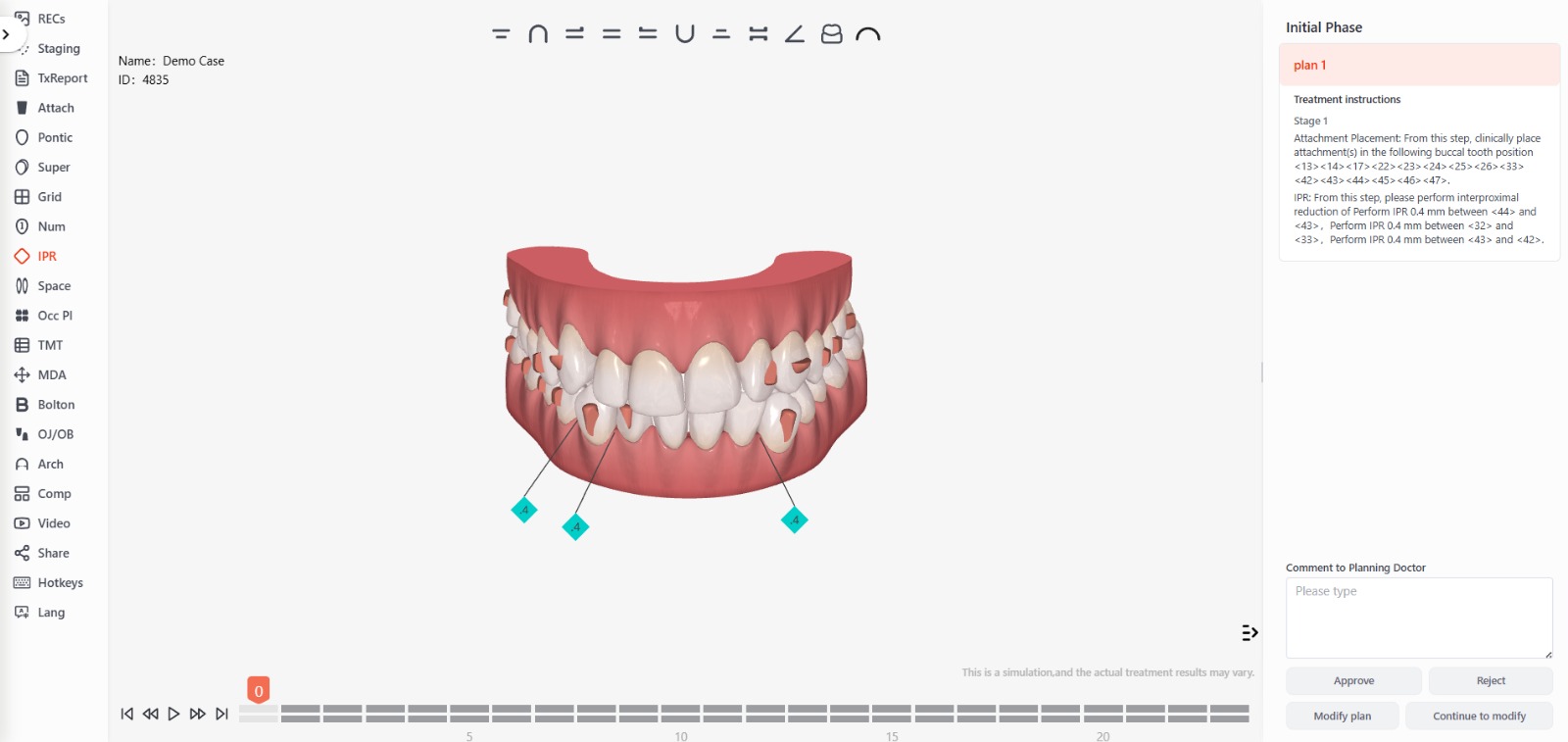
The software can be used immediately without the need to spend valuable time on extensive training, allowing for quick integration into daily practice.
Familiarity with an interface and functions similar to those already known reduces the likelihood of making mistakes during treatment design and planning, ensuring greater accuracy in the results.
With software that is intuitive from the start, it’s possible to work more efficiently, optimizing the orthodontist’s and their team’s time in aligner design.
Ease of use and similarity to other familiar programs increase comfort and confidence in the software, resulting in a more satisfying and productive experience for both the orthodontist and the patients.
Comprehensive Review
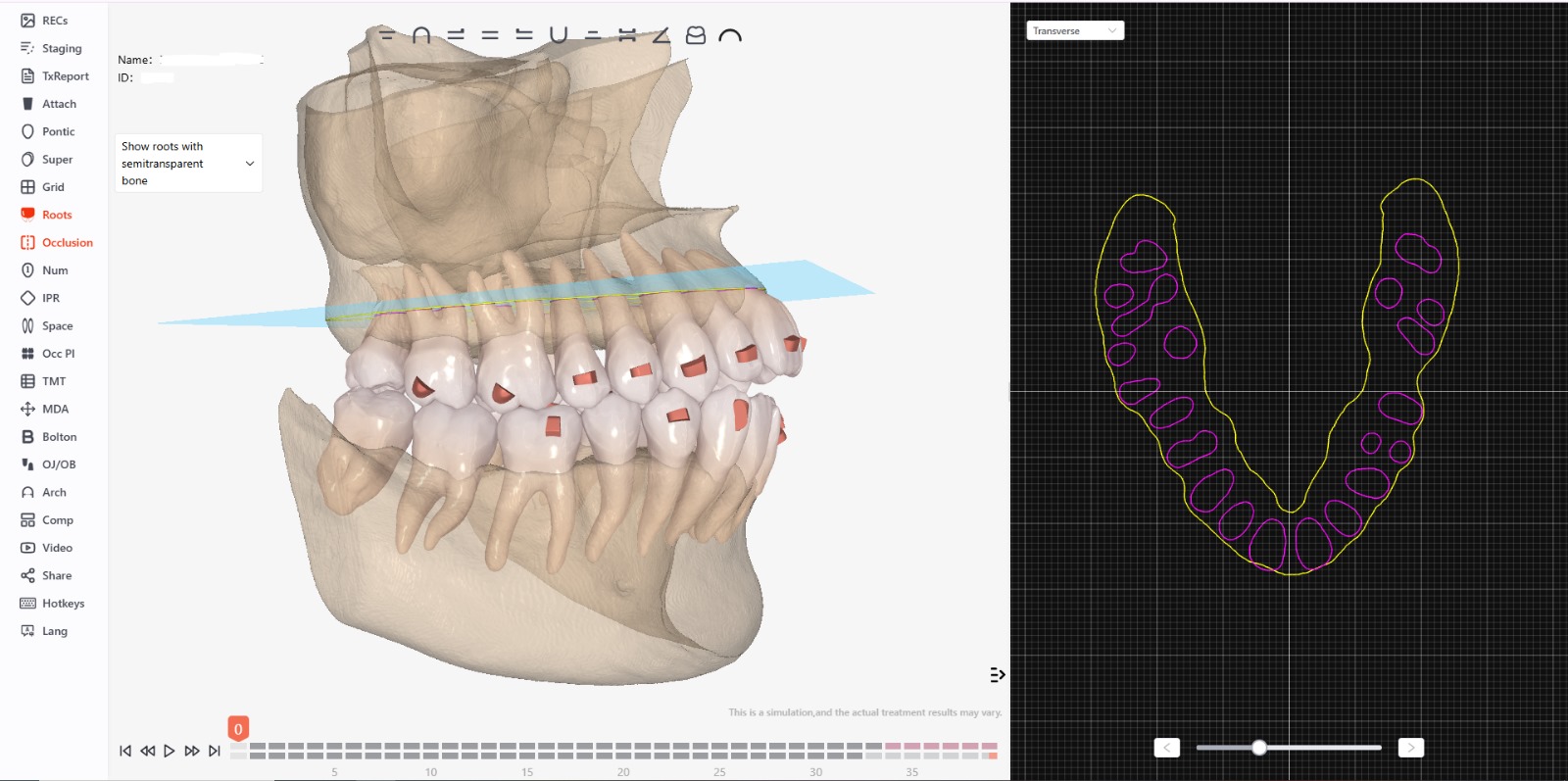
By integrating orthodontic design with the patient’s images and X-rays, a complete and accurate view of the dental situation is achieved. This allows for better evaluation and treatment planning, ensuring that every tooth movement is based on precise anatomical data.
The ability to compare the design with the patient’s actual images makes it easier to identify potential complications or additional adjustment needs. This way, the treatment plan can be modified in real time, improving its effectiveness and efficiency.
Showing the patient the orthodontic design alongside their own images can help explain the treatment plan more clearly and understandably. This can increase the patient’s confidence and understanding of the process, which is essential for cooperation and treatment success.
Having all the images and the design in a single platform makes it easier to track treatment progress. The current status can be easily compared with the initial plan, and adjustments can be made if necessary, ensuring the treatment stays on track.
The integration of these tools into a single program reduces the need for additional appointments and the time spent coordinating between different systems. This not only enhances the orthodontist’s workflow efficiency but also allows for more effective use of the patient’s time.
Each patient has a unique dental structure. By using a program that allows simultaneous visualization of the design and the patient’s images, treatment can be personalized in a more detailed and specific way, tailoring each aligner to the patient’s individual needs.
With integrated visualization, the risk of errors in treatment design and application is minimized. Simultaneous comparison allows for the detection and correction of any discrepancies before they become a problem.
Occlusal Contact Analysis
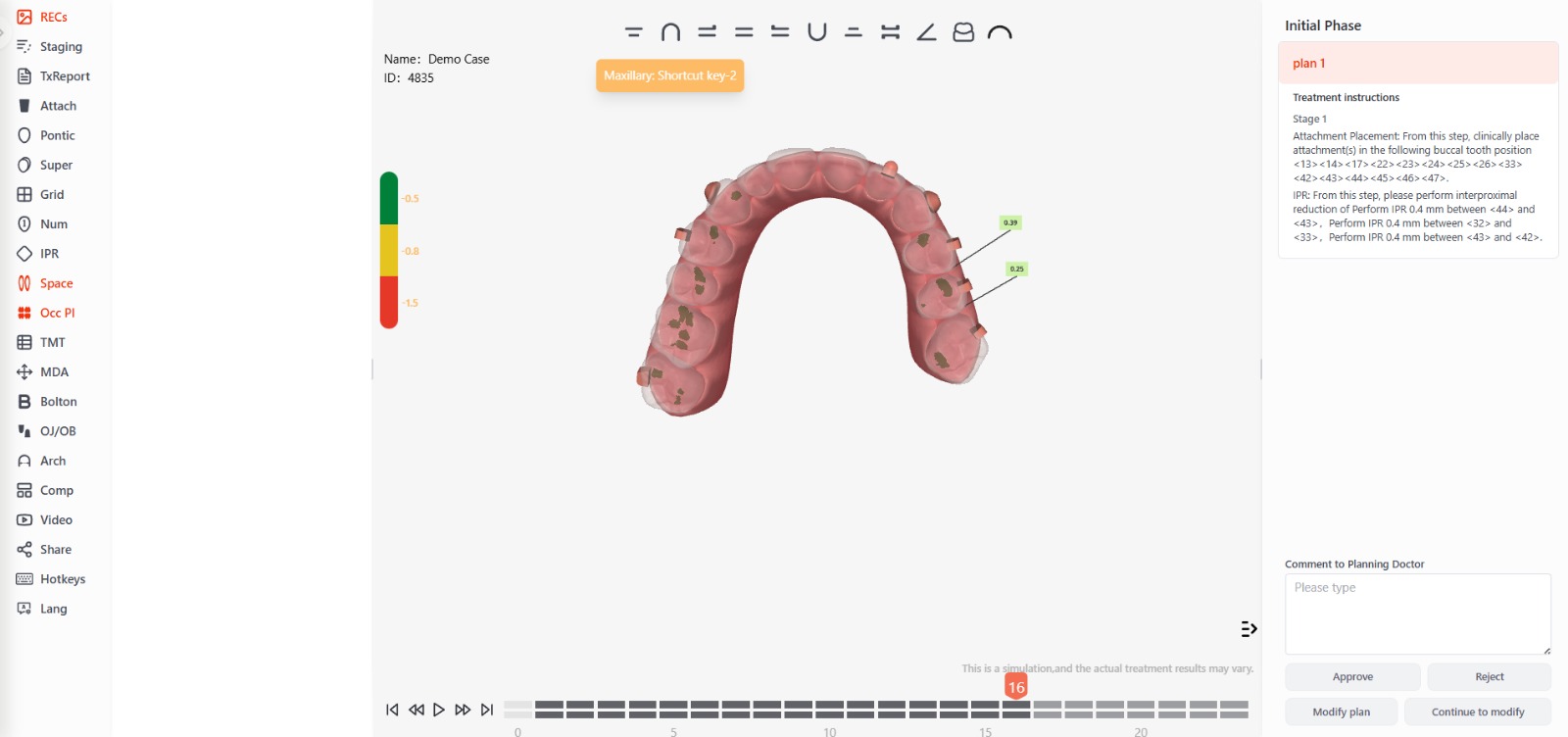
Allows for an exact adjustment of how the teeth fit together, improving bite functionality.
It enables quick and precise adjustments to the design, reducing the need for later corrections.
It facilitates more detailed and personalized planning by identifying and correcting occlusion issues before starting the treatment.
It contributes to a more functional and comfortable occlusion, enhancing the quality of the final outcome.
It helps explain how the treatment will affect the bite, improving the patient’s understanding and cooperation.
It allows monitoring how the occlusion evolves throughout the treatment.
It allows for identifying and correcting occlusal misalignments before the devices are fabricated.
Evaluation of Planned Movements
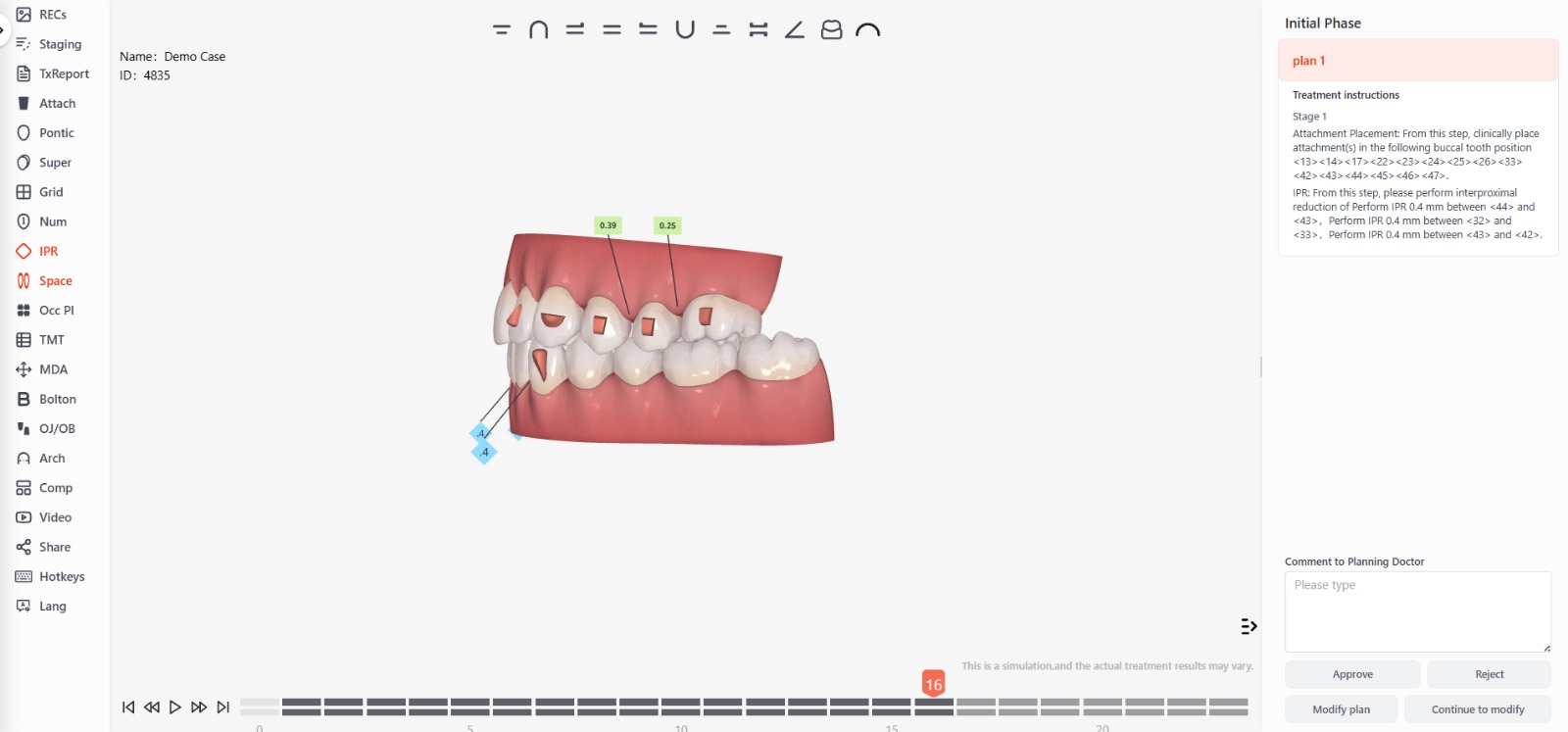
It allows for directly comparing the initial and final positions, making it easier to assess the progress of the treatment.
Familiarity with an interface and functions similar to those already known reduces the likelihood of making mistakes during the design and treatment planning, ensuring greater accuracy in the results.
It allows for adjusting and refining the treatment strategy to achieve more precise results.
Error reduction helps minimize mistakes in treatment design and application, leading to better outcomes and fewer adjustments needed during the process.
It facilitates the early detection of discrepancies and potential problems, allowing for timely adjustments.
It helps explain the treatment clearly and manage the patient’s expectations with effective visual representations.
It facilitates monitoring progress and making treatment adjustments according to the planned final position.
Critical Parameters: Bolton
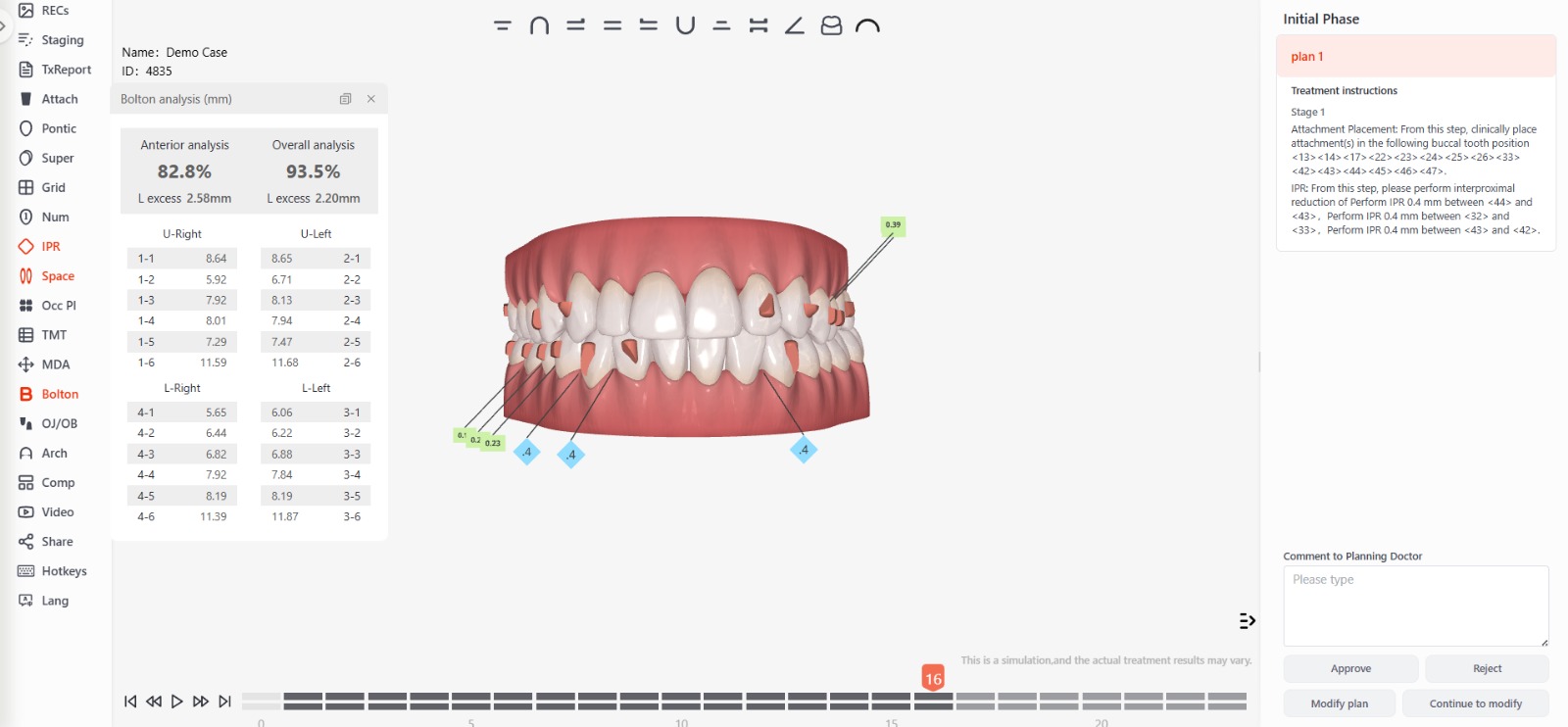
It allows for identifying discrepancies in tooth size between the maxilla and mandible, facilitating proper balance in the occlusion.
It helps design personalized treatment plans, ensuring that the teeth align correctly at the end of the treatment.
It facilitates space management planning, preventing issues such as crowding or excessive gaps between teeth.
It helps achieve a proper functional and aesthetic occlusion, improving chewing and the patient’s appearance.
Critical Parameters: Arch
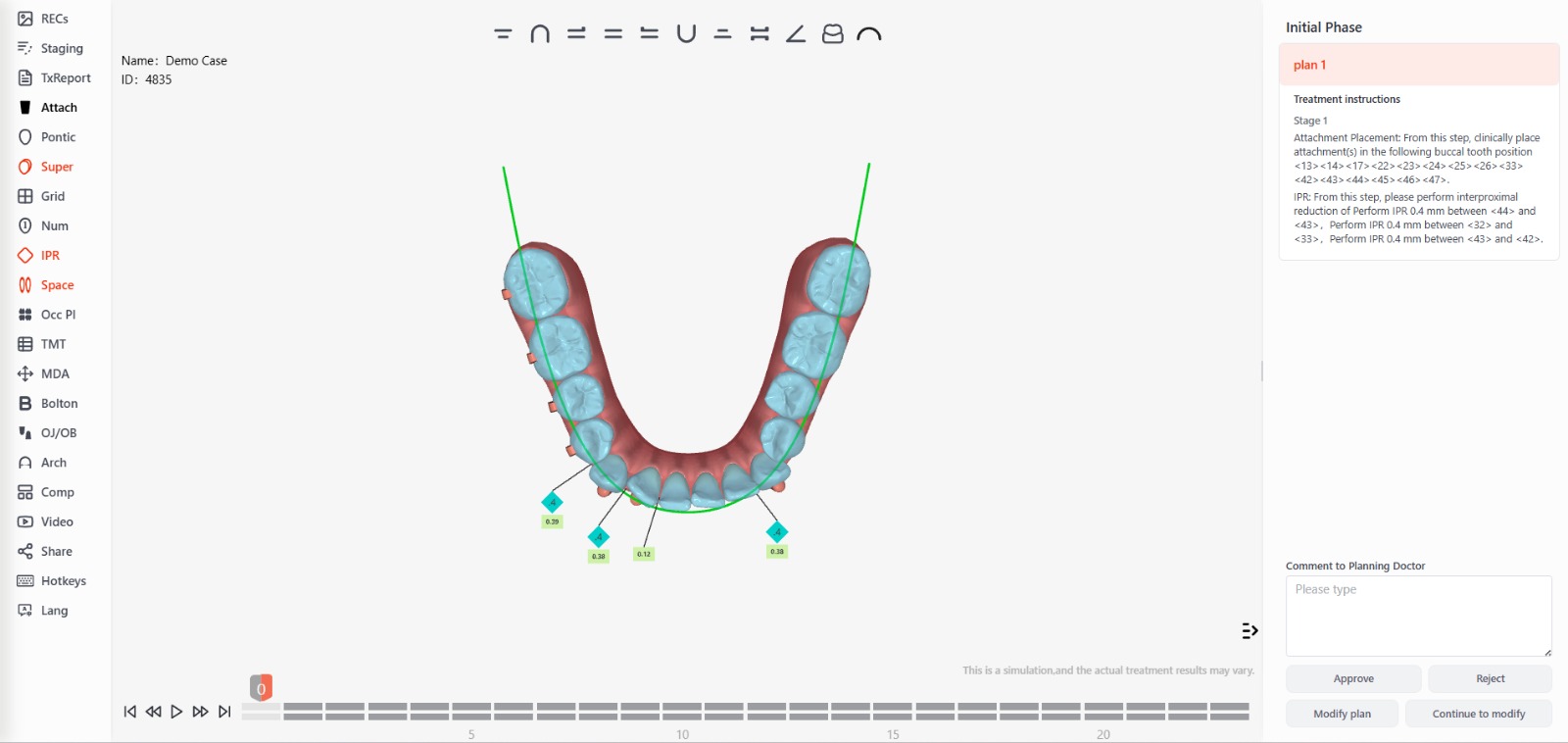
It provides a detailed view of the dental arch shape, allowing for precise adjustments during treatment.
It helps plan the alignment of the teeth within the arch, ensuring an even and aesthetic distribution.
It facilitates the anticipation of the dental movements needed to achieve the desired arch shape, improving treatment effectiveness.
It allows the treatment to be adjusted to the individual characteristics of the patient’s arch, optimizing results and patient satisfaction.
Exclusive Advantage: Overjet/Overbite Button
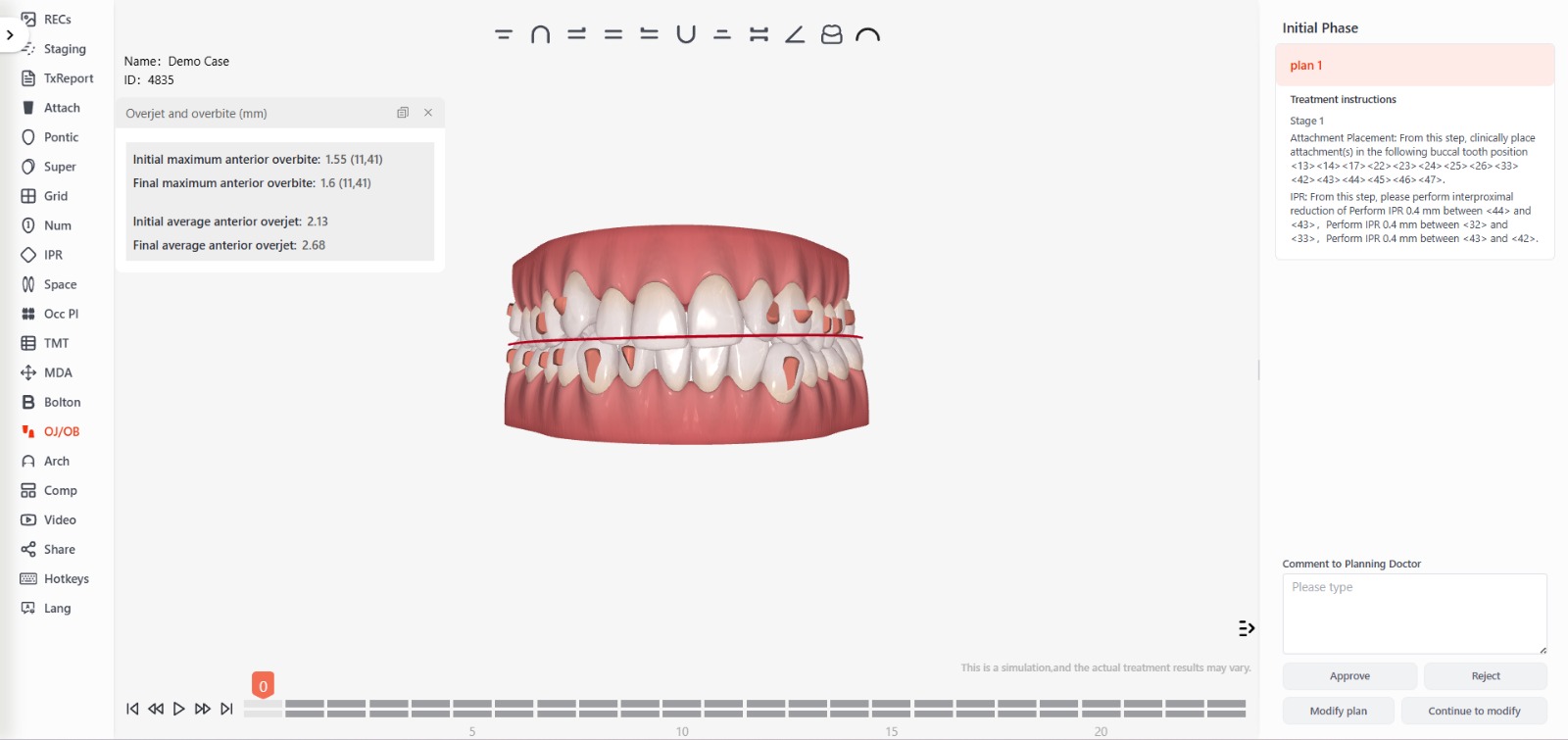
It allows for a detailed and accurate evaluation of overjet (the horizontal projection of the upper anterior teeth over the lower teeth) and overbite (the vertical overlap of the upper anterior teeth over the lower teeth), enabling an exact diagnosis.
It helps plan treatment more efficiently, ensuring that the aligners are designed to correct these specific discrepancies.
It allows for real-time monitoring of treatment progress, making any necessary adjustments to ensure that the correction objectives for overjet and overbite are being met.
It facilitates achieving more predictable and satisfactory results, improving both masticatory function and dental aesthetics.
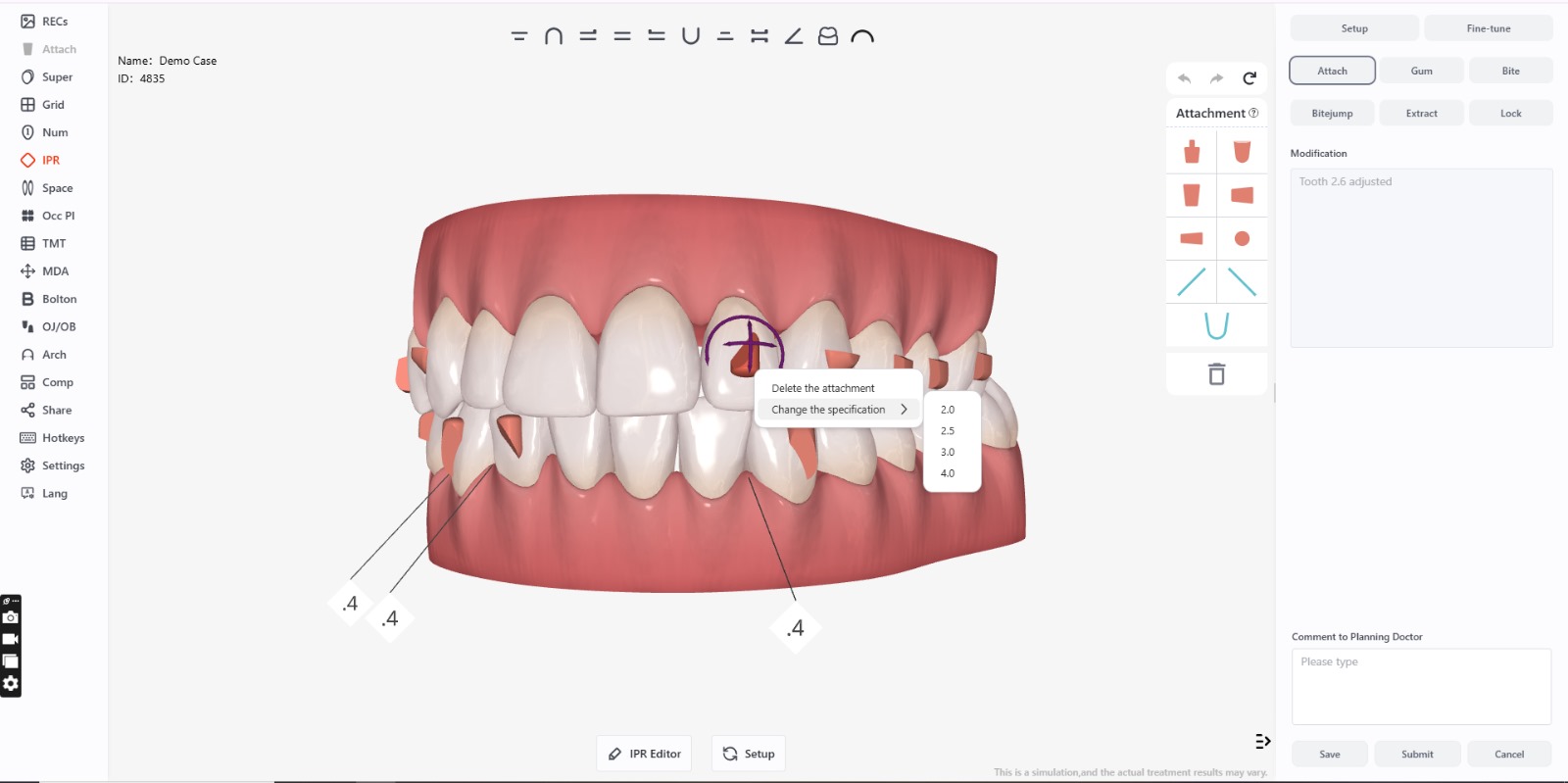
Attachment Customization
Elastics Visualization
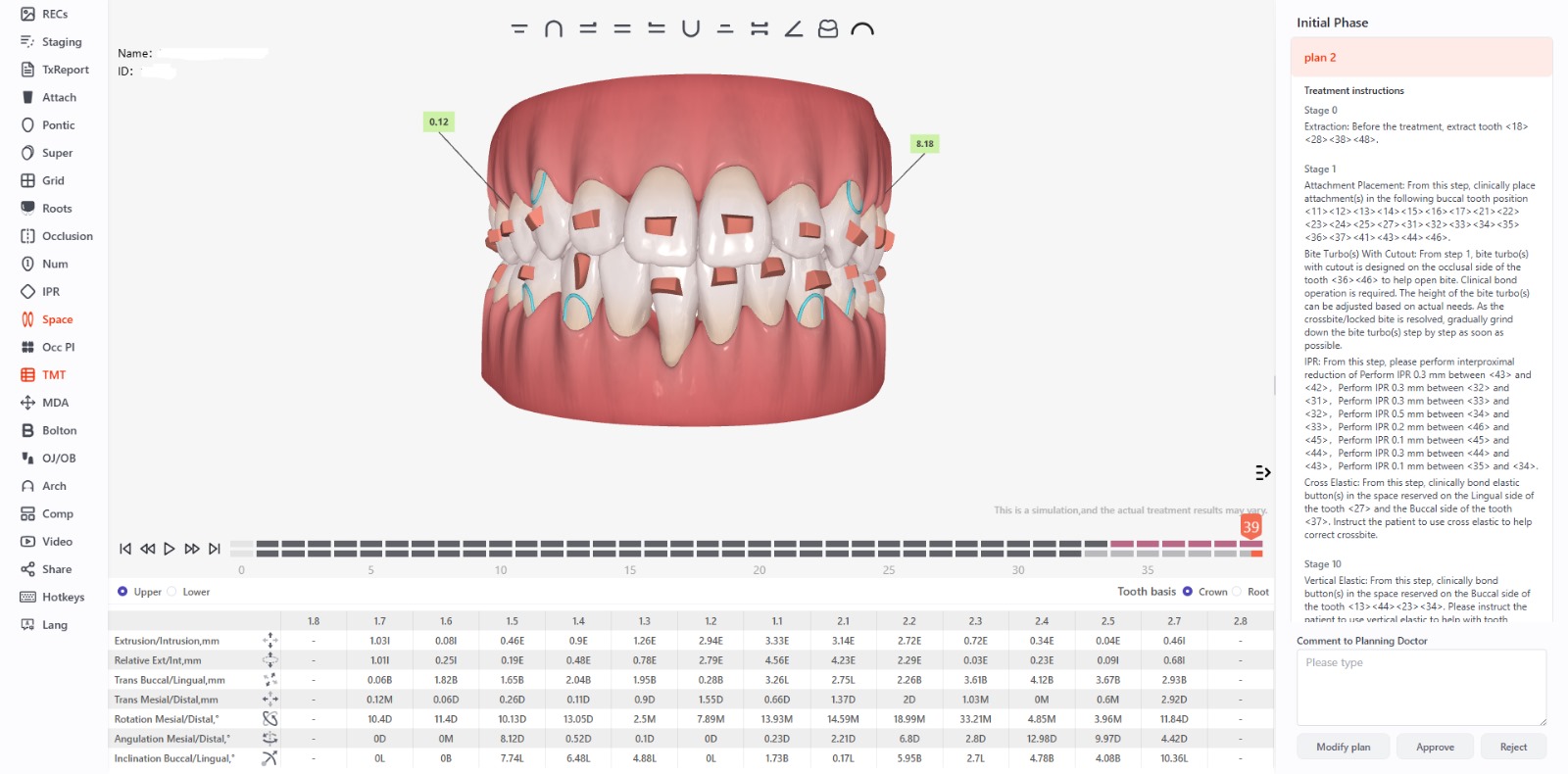
It allows planning and simulating the use of these auxiliary devices during treatment. It is used to:
- Treatment design: Helps anticipate how elastics will influence tooth movements and the overall biomechanics of the case.
- Planning validation: Allows for checking whether the use of elastics is effective in achieving the treatment objectives.
- Communication with the patient: Visualizing the elastics in the simulation helps explain to the patient the importance of their use and their impact on the final results.
- Resource optimization: Helps the orthodontist decide on the most suitable anchorage points and type of elastics without the need for repeated trials.
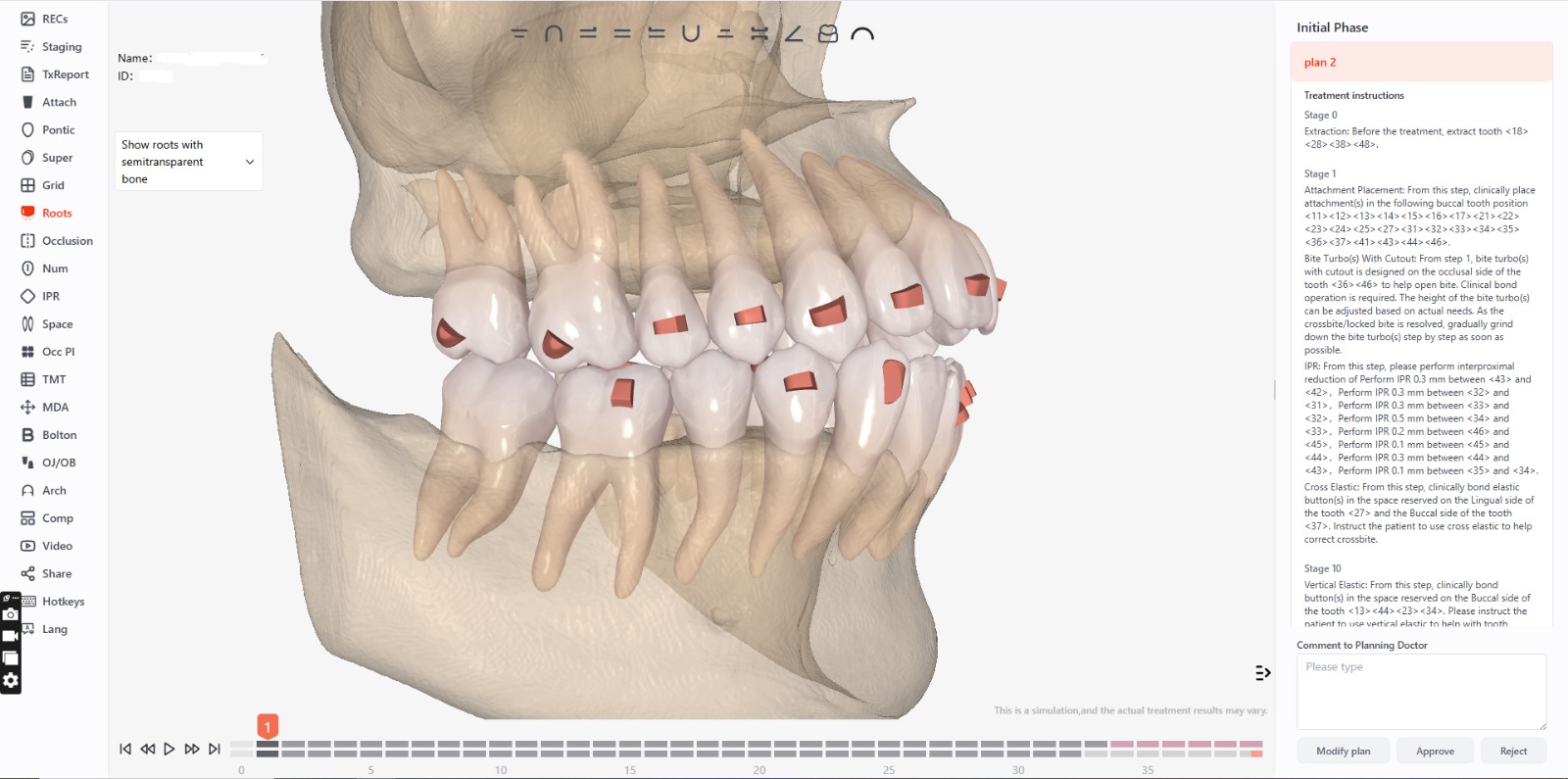
CBCT
Cephalometric Analysis
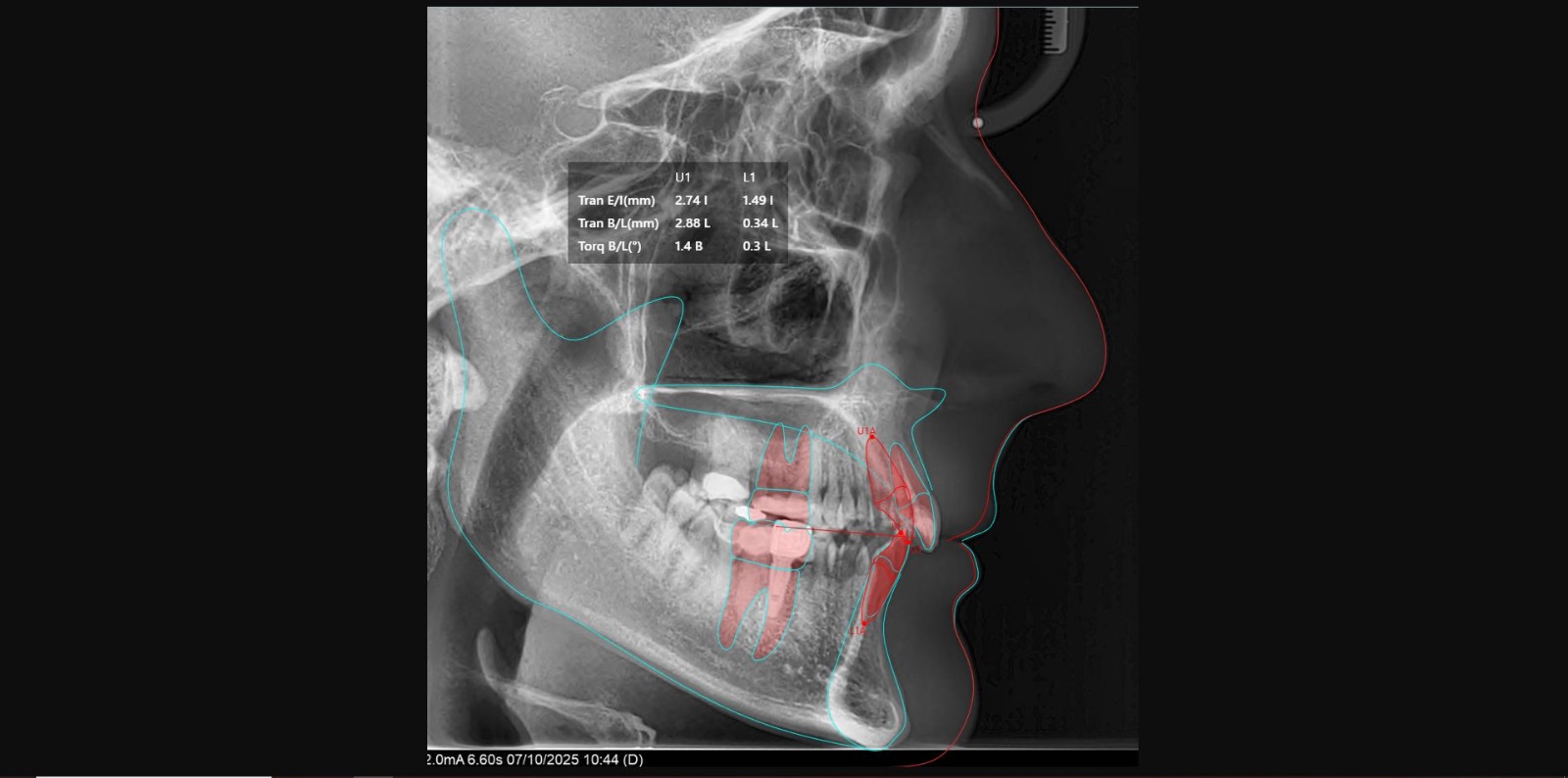
Proporciona una evaluación precisa de la relación y posición de los dientes, huesos y tejidos blandos.
Ayuda a identificar anomalías esqueléticas y dentales, facilitando un diagnóstico detallado.
Permite prever cambios faciales y estructurales a lo largo del tratamiento.
Optimiza la planificación y seguimiento del tratamiento, mejorando los resultados finales.
Movement Limits
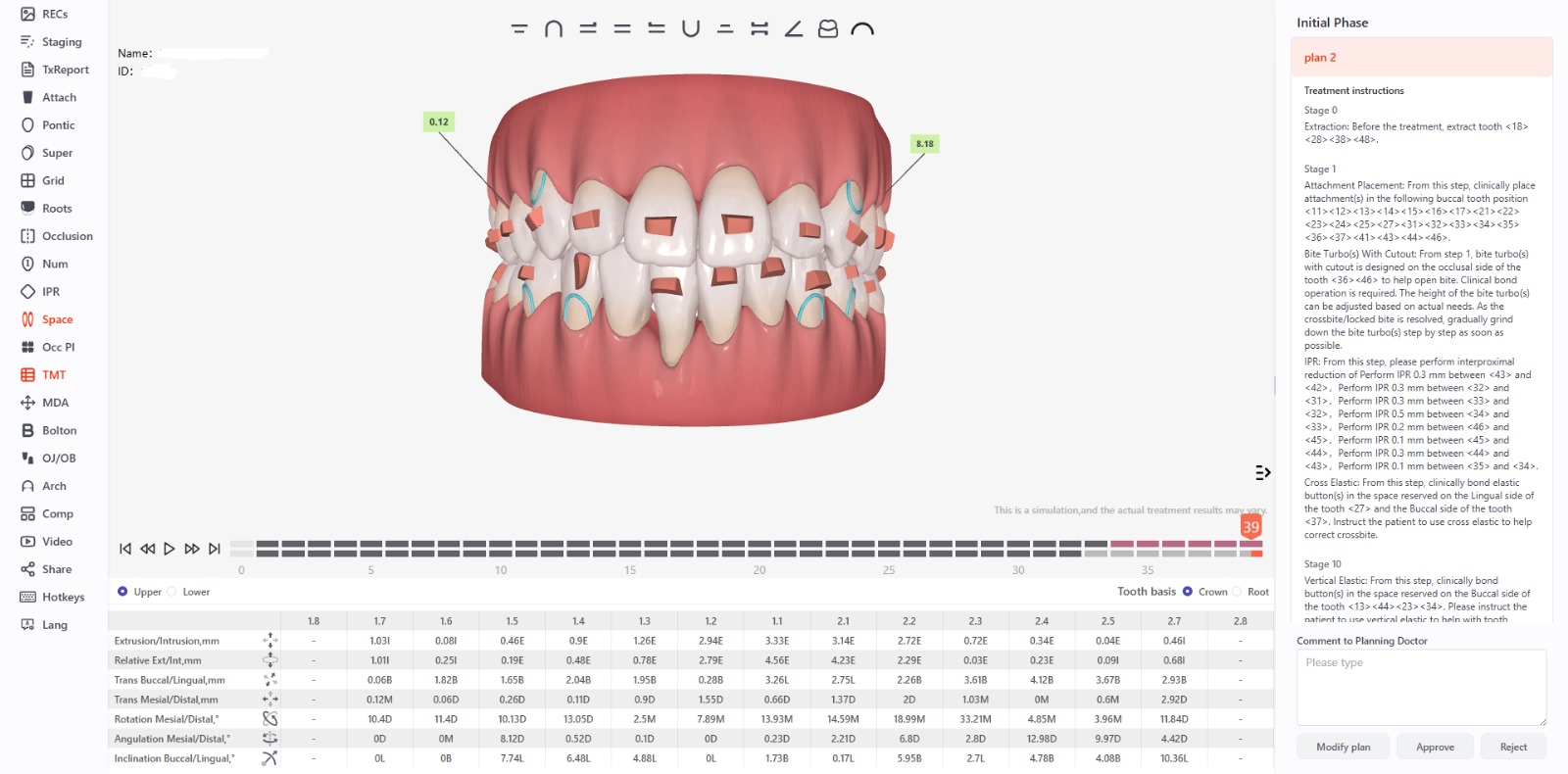
They are designed to ensure that the forces applied are safe and effective for the teeth and surrounding tissues.
They serve to:
Patient Safety: Avoid excessive or rapid movements that could damage dental roots, bone, or periodontal tissues.
Clinical Realism: Simulate movements within acceptable ranges based on the patient’s biology and clinical experience.
Treatment Optimization: Allow adjustments that maximize treatment efficiency without compromising success.
Error Prevention: Help identify configurations that may be biomechanically unviable or counterproductive.
- It allows the orthodontist to anticipate the complexity of the required tooth movements and properly plan the treatment, as well as the potential need for auxiliary elements.
It helps identify movements that could be difficult or risky, reducing the chance of causing damage to teeth or bone structures.
Facilitates communication with the patient about the time, effort, and potential challenges of treatment, setting realistic expectations.
Total Tooth Movement
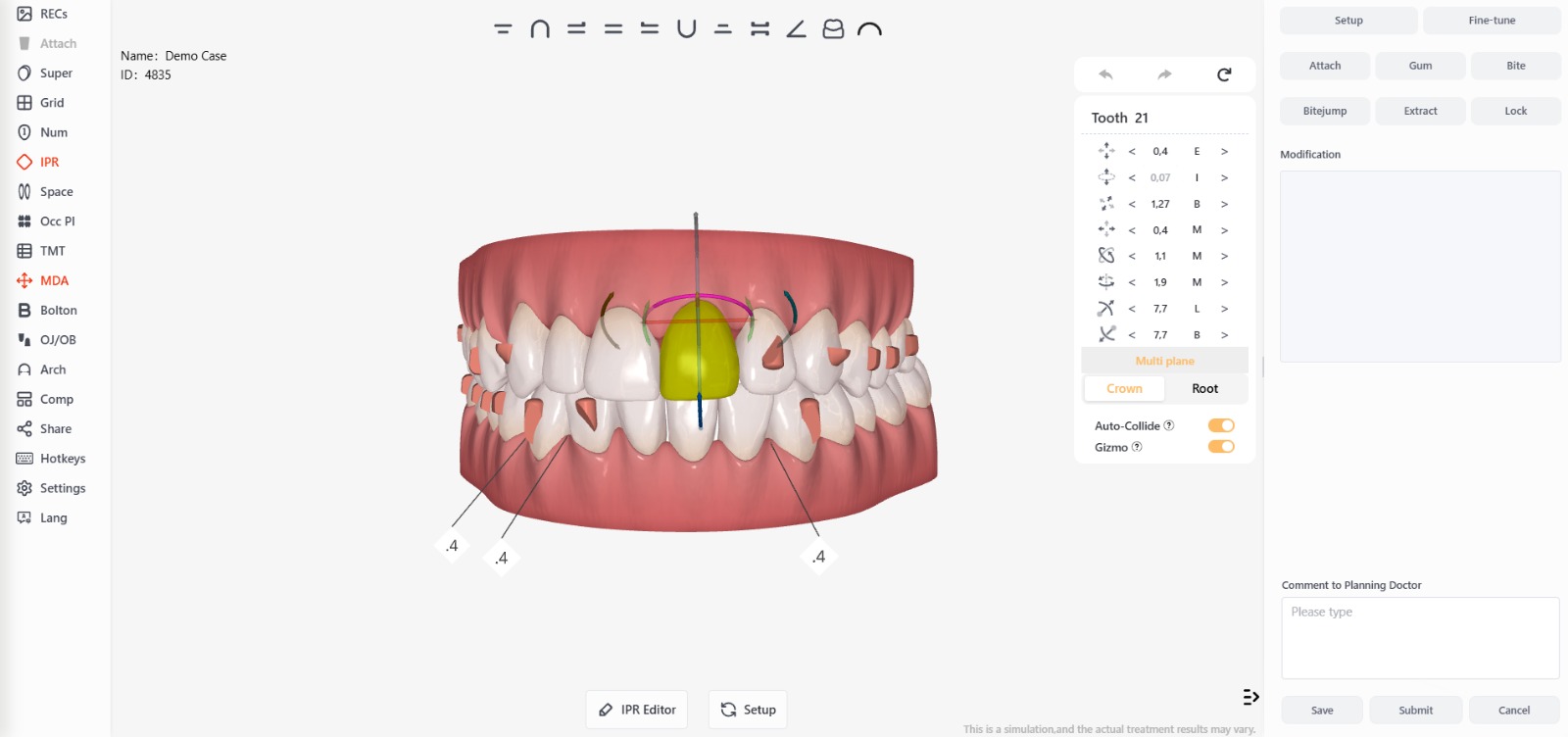
Tooth movement chart that provides a detailed visualization of how each tooth will move throughout the treatment process.
Each tooth in the graph is clickable; selecting a tooth displays detailed information about its movement. It turns green once selected, and to remove the color, click directly on the attachment.
Treatment report
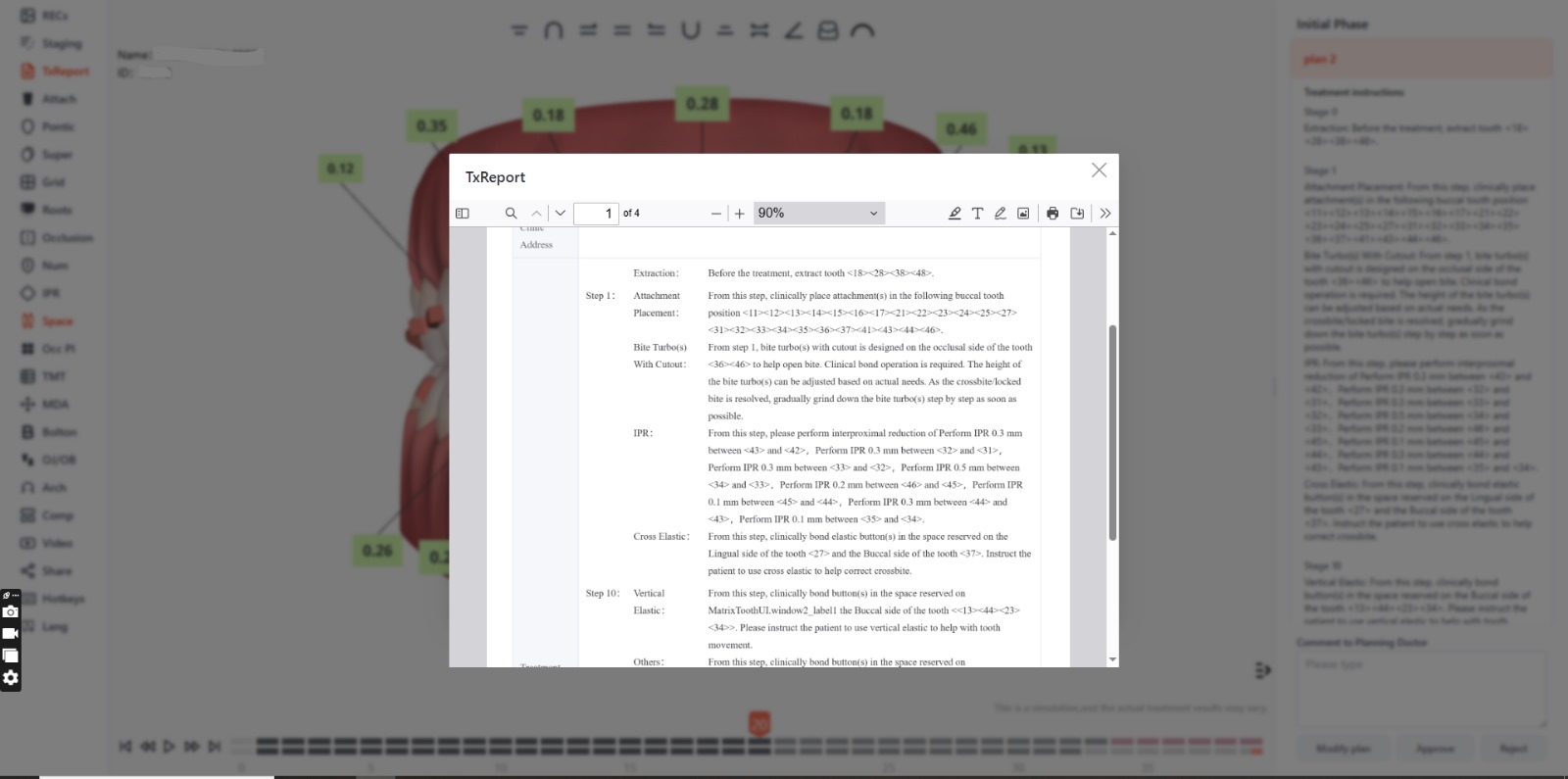
This option opens a detailed document that provides a comprehensive view of a patient’s progress and treatment planning. This report is crucial for both dental professionals and patients, as it offers a structured guide to the process and helps ensure that treatment is carried out efficiently and effectively. This document can be downloaded and printed.
Dental Numbering System
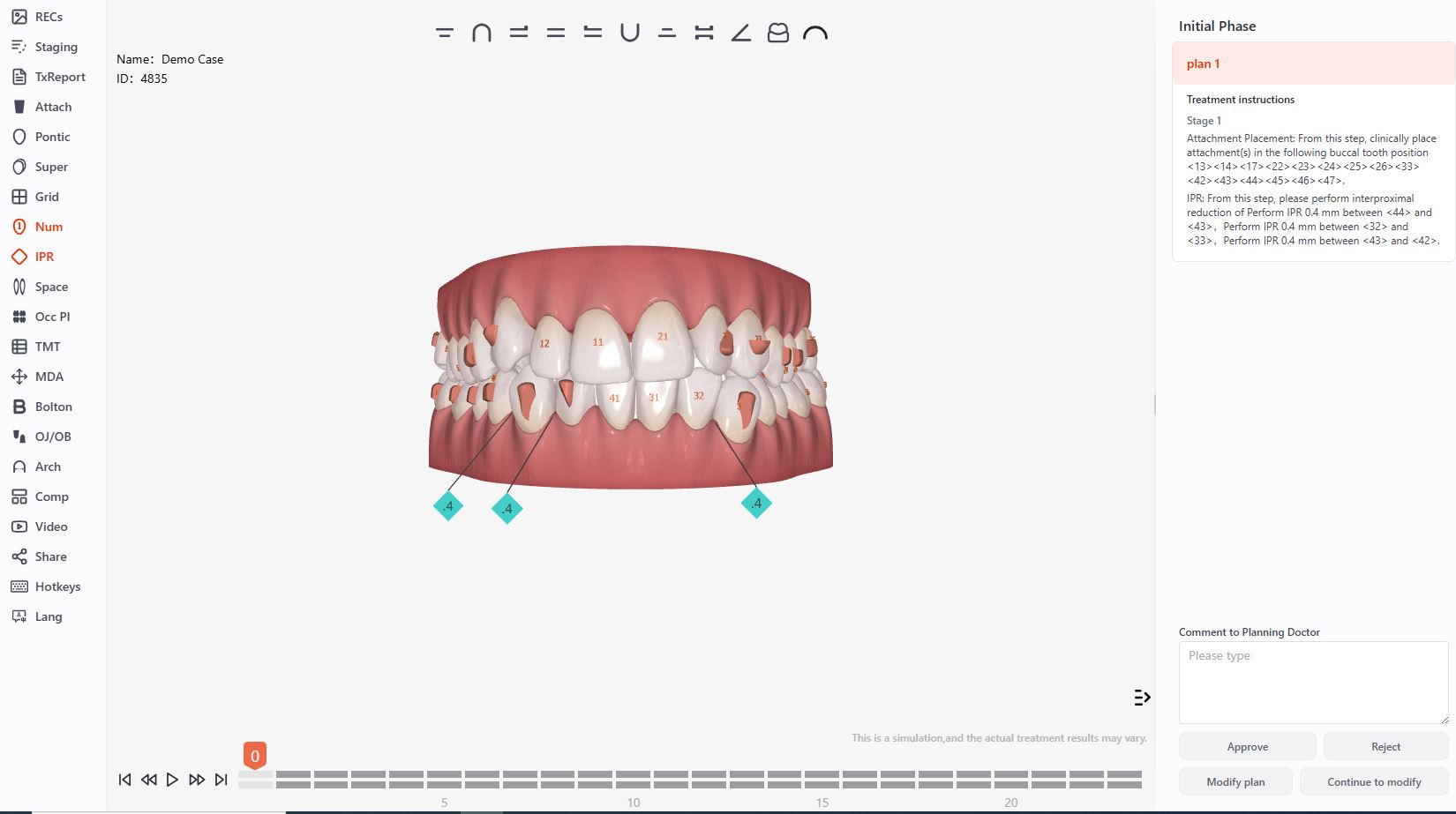
It is used to accurately and standardize the identification of each tooth within the program interface.
Its importance lies in:
- Planning Clarity: Facilitates rapid identification of each tooth to design specific movements.
- Standardization: Uses recognized systems such as the FDI (International Dental Federation) or Palmer, depending on the professional’s or regional preferences.
- Effective Communication: Enables better collaboration between orthodontists, technicians, and other specialists by using a common language.
- Treatment Monitoring: Simplifies tracking of movements and adjustments needed during different phases of treatment.
- Personalization: Associates each number with specific tooth characteristics (size, shape, position) for a more accurate simulation.
Space
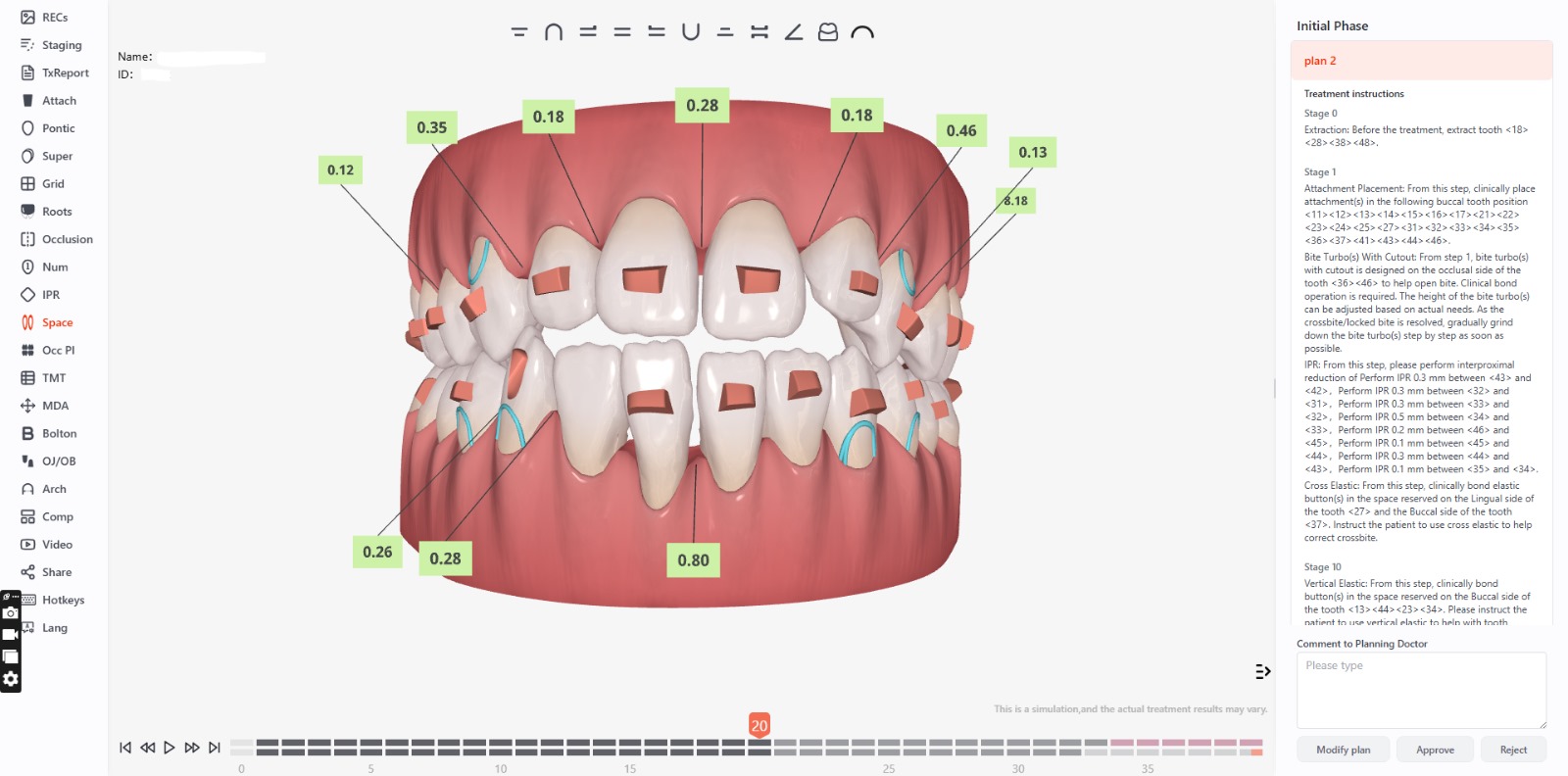
This option represents the amount of space between the teeth. If it’s negative (more than 0.08 mm), then there’s a collision and IPR is needed. If it’s positive, it means there’s enough space between the teeth, so IPR isn’t needed.
Collision of the Roots
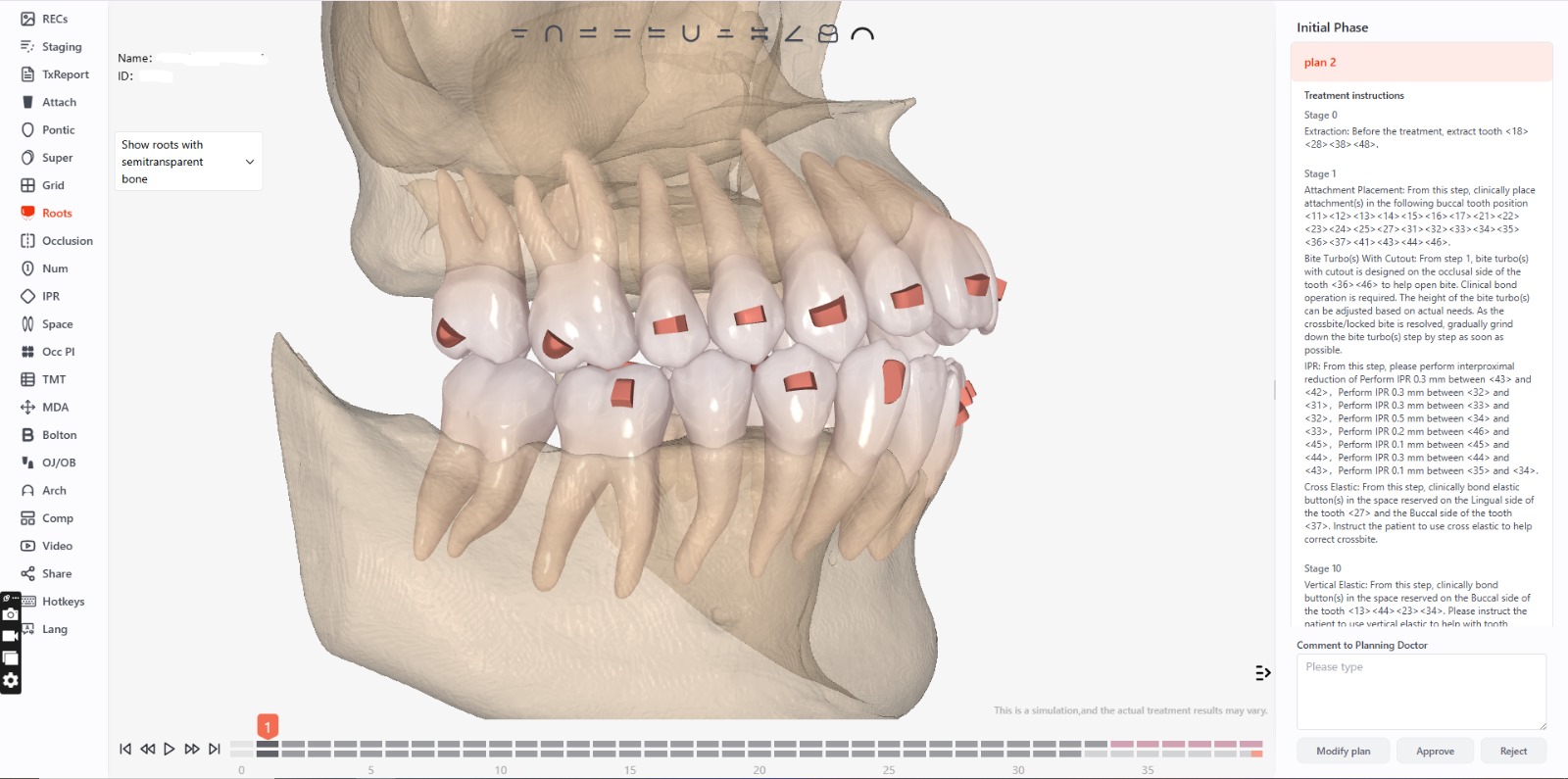
It is an analytical tool that evaluates the proximity between tooth roots during treatment planning.
Its usefulness includes:
- Damage prevention: Detects potential collisions between tooth roots that could compromise periodontal health or cause root resorption.
- Precise planning: Helps plan safe and biomechanically viable tooth movements, minimizing the risk of root interference.
- Space optimization: Identifies the need for expansions, extractions, or adjustments to avoid conflicts in planned movements.
- Treatment safety: Ensures that movements are not only effective but also safe for surrounding structures.
- Clear visualization: Provides visual alerts or specific reports on critical areas, improving the orthodontist’s decision-making.